

Key Takeaways
-
Recovering worn camo boat seats usually costs less than buying new, as long as the frame, hinge, and base still work.
-
Hidden Creek camo vinyl comes in two patterns, Marsh and Autumn, and carries a -25°F cold crack rating.
-
Waterlogged foam is the hidden problem on duck boats, so squeeze-test every cushion before you recover it.
-
Folding, high back, and low back seats all recover the same way, but high backs take more yardage.
-
A duck camo vinyl wrap is an adhesive film for trucks, not an upholstery vinyl that will stretch over foam.
Camo boat seats take a beating every fall. Wet decoys, muddy boots, and dog claws wear through a cover faster than a whole summer of fishing. When a seat splits a week before the opener, most hunters assume they need new seats. Often, recovering the ones you already own costs less and gets you back on the water sooner.
A new seat bundles the price of the frame, hinge, foam, and cover into one purchase. If the frame still works, you only need to replace what wore out. Midwest Fabrics carries Hidden Creek camo marine vinyl, sold by the linear yard in two patterns made for duck boats, blinds, and fishing rigs. Here's how to decide between recovering and replacing, which pattern fits your setup, and how to recover a seat in an afternoon.
Recovering Camo Boat Seats vs. Buying New
Price is the first question, and the answer depends on what's broken. Boat seats fail in layers: the cover goes first, the foam second, and the frame or aluminum hinge usually outlasts both. If the shell is cracked or the hinge has seized, new seats are the honest answer.
If the shell and hinge still work, buying a new camo boat seat means paying for parts you already have. Hidden Creek runs $34.95 per linear yard at the time of writing, and its 54-inch width lets you nest seat and back panels side by side to keep yardage down. Add closed-cell foam only if the old cushion is soaked, plus a box of hog rings or staples. With three or four seats aboard, that gap adds up fast.
Recovering also keeps your existing mount, so nothing on the deck needs new holes, and you won't wait on backordered seats to ship. Before you add new seats to a cart, read the reviews. Complaints about cracked covers, split seams, and fading after one season usually mean the cover failed while the frame held up, which is exactly the case where recovering wins.
Folding, High Back, and Low Back Styles
Most camo seats fall into a few styles, and each takes a different amount of vinyl and foam. The same styles show up as fishing seats, so this applies to a bass boat as much as a duck boat.
Folding Boat Seats and the Aluminum Hinge
Folding boat seats are the most common choice on duck boats, jon boat rigs, and small fishing boats. They fold flat for storage and travel, then lock upright when you sit. Most pivot on an aluminum hinge, which holds up well in wet conditions.
Before you recover a fold-down seat, work the hinge through its full range and look for bent tabs or missing hardware. A strap camouflage boat seat uses webbing to hold the back upright, and old webbing often fails before the vinyl does. Replace worn straps now, while the seat is already apart.
Camo High Back vs. Low Back Seats
High back seats support your shoulders and lower back on long runs or a full day in the blind, which makes them a popular pick for hunters who sit for hours. Low back seats stay out of the way when you're casting or swinging on birds, so they're common on casting decks.
A camo high back folding seat needs more yardage and a separate back cushion. Low back seats can often be covered from a single panel layout. Measure each seat before you order and add a few inches per side for wrapping and fastening.
Why Marine Grade Vinyl Matters on Camo Boat Seats
A duck boat sees water, sun, mud, and freezing mornings in the same week. Marine grade vinyl handles that far better than standard upholstery fabric, which soaks up moisture and grows mildew. Vinyl sheds water and wipes clean after a muddy hunt.
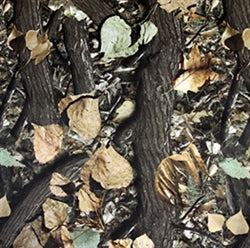
Hidden Creek comes in two patterns. Marsh is a realistic marsh grass print that blends into cattails and flooded timber edges, while Autumn is a fall foliage and branch print for woods and river bottoms. Both share these listed specs:

|
Spec |
Hidden Creek Marsh and Autumn |
|
Finished width |
54 inches |
|
Weight |
33 +/- 2.25 oz per linear yard |
|
Thickness |
35 +/- 4.0 mils |
|
Abrasion resistance |
No significant wear after 500,000 double rubs (Wyzenbeek) |
|
Cold crack |
-25°F |
|
Weathering |
1,000 hours WeatherOmeter |
The cold crack rating matters when seats sit in a frozen boat overnight, and the abrasion result speaks to waders and dogs climbing over them every trip. For seat bottoms, trim panels, or a boat that doesn't need camo, our marine vinyl collection covers solid colors.
Searching for bottomland camo boat seats or a specific licensed pattern? You'll mostly find those on finished seats. Hidden Creek gives you a natural-cover camo vinyl you can cut and sew yourself. Skip any duck camo vinyl wrap, though: it's an adhesive film for trucks and won't stretch around foam.
How to Recover Camo Boat Seats for Duck Season
Recovering is an afternoon project. These steps fit duck boats and blinds, where seats get wet often and then sit in storage for months.
-
Remove the seats. Unbolt each one from the pedestal or deck mount and bag the mounting hardware. Pull staples or cut hog rings, and keep the old cover intact to use as your pattern.
-
Check the foam. If water comes out when you squeeze it, the foam is waterlogged and needs replacing. Closed-cell foam for boat cushions doesn't absorb water the way open-cell foam does.
-
Pattern the cover. Trace the old pieces on the back of the vinyl and add seam allowance. Order a sample first, since colors vary on screen.
-
Fasten the vinyl. Stretch it from the center out, using hog rings on wire frames or stainless steel staples on a wood or plastic base. Hog ring pliers are in our upholstery tools collection.
-
Reinstall. Bolt the seats back with stainless steel screws and confirm the mount is tight before the first trip.
For sewing and topstitching details, see our full guide on how to reupholster boat seats.
Keeping Camo Boat Seats Ready All Season
Wipe mud off with mild soap and let the seats dry before you cover the boat. For winter storage, pull removable seats and keep them somewhere dry to protect the vinyl and foam. Check every seat, mount, and piece of hardware each spring and fall, and you'll catch a loose hinge or a split seam before it ruins a hunt.