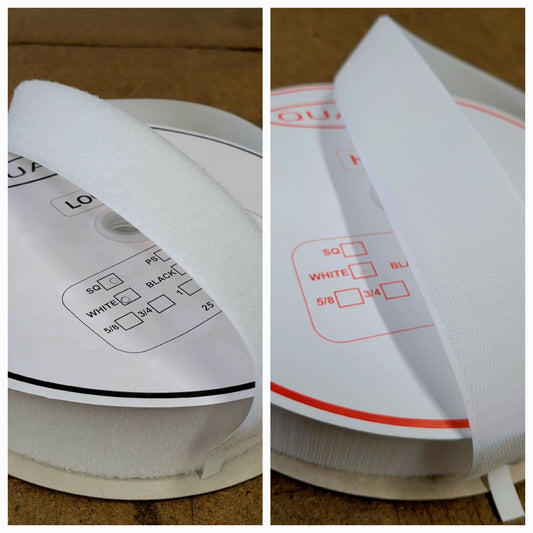
How the Hook and Loop System Works
Hook and loop fasteners are a two-piece closure system made up of a hook side and a loop side. The hook side has stiff, bristle-like hooks, while the loop side is soft and fuzzy. When pressed together, the hooks catch the loops and create a secure hold. When pulled apart, they release without damaging the material.
This type of hook and loop closure is ideal for applications that require repeated opening and closing. It creates a strong temporary bond without adhesives or permanent stitching in some cases. For upholstery work, both sides are often sewn directly into fabric, giving you a clean and durable finish that holds up over time.
Midwest Fabrics carries both hook tape and loop tape, so you can match or replace either side depending on your project.
Sew-On vs. Adhesive Hook and Loop
Not all hook and loop fasteners are built the same. The main difference comes down to the backing.
Sew on hook and loop is designed for fabric and upholstery. It has a sewable backing that allows you to stitch it directly into materials like vinyl, canvas, or cloth. This option holds up better under stress, movement, and washing, making it the preferred choice for automotive, marine, and furniture applications.
Adhesive hook and loop uses a pressure sensitive backing that sticks to hard surfaces like plastic or metal. It’s useful for quick installs, but it can lose strength over time, especially in heat or moisture. For most upholstery projects, sew-on is the better long-term solution.
Hook and Loop Upholstery Applications
Automotive Upholstery
Hook and loop fastener automotive applications are some of the most common. It’s widely used to attach seat covers to foam and frames, secure headliner panels, and hold door panel inserts in place. Because it allows for removal and reinstallation, it’s a practical alternative to permanent adhesives.
For heavier-duty areas like seat covers, a 2" width with sewable backing provides a stronger hold. It’s also useful for creating hook and loop straps that keep components aligned without rigid fasteners.
You’ll often see it paired with materials like automotive vinyl and upholstery fabric or used alongside automotive headliner fabric for interior restoration work.
Marine & Boat Upholstery
In marine settings, hook and loop plays a key role in keeping cushions and panels secure. It’s used to attach cushion covers to boat seats, fasten canvas covers, and hold cockpit panels in place.
Moisture and temperature changes can cause adhesives to fail, which is why sew-on hook and loop is preferred for hook and loop marine use. It stays reliable even in tougher conditions and repeated use.
It’s commonly used with marine and furniture upholstery fabric when building or repairing boat interiors.
Furniture & Home Upholstery
For furniture, hook and loop is a practical way to secure cushion covers, attach seat pads, and manage removable slipcovers. It’s especially useful in projects where you want a clean look without visible fasteners.
Many people refer to this as velcro tape for fabric or look for a velcro roll, especially when working on larger projects. The 1" width is often enough for furniture applications, providing a balance between hold and flexibility.
It pairs well with upholstery foam when building or repairing cushions, helping keep everything in place without making the cover permanent.
Hook and Loop FAQ